Thursday, June 3, 2010

Types of Foundation Damage


A foundation failure can exhibit itself in a number of ways. Some types of foundation damage are easy to see, such as cracks in the wall. Others, however, are not so obvious (loosened plumbing under the house which in turn causes slow leaks). Below, we'll look at several types of damage caused by a moving or broken foundation.

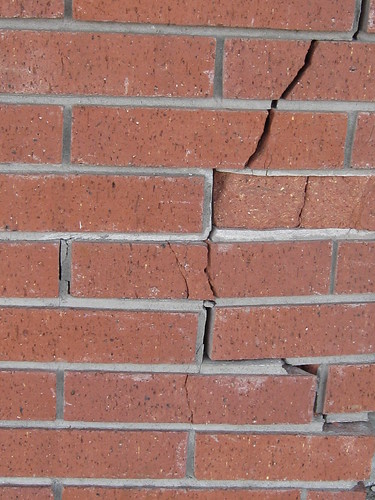
Cracks in one or more walls

If you find cracks in your walls, then that's a sign that there is a fundamental shift in at least part of the wall and one part is pulling away from another or one wall is pulling away from another. This can happen when part of your foundation shifts (by moving sideways, downward or upward, or both) yet the whole structure doesn't move in the same direction at the same speed. In other words, part of the house has moved horizontally or vertically and the rest hasn't.

Stuck Doors and Windows

Doors and windows get stuck in their frames when the frames are no longer square. In some cases, the frame is narrower at one end than the other. In other cases, the frame can be twisted. With the naked eye, you might not be able to see these deformations in the door frame or window frame, but the door or the window can certainly tell the difference. If the door gets lodged in the frame and won't open or it won't close all the way without hitting the frame, then the door frame is out of square. If the window is stuck shut or won't open all the way, then the window frame is not square. Much like the cracked walls discussed above, bent door and window frames can be caused by a foundation shifting. Indeed, bent frames are often found in cracked walls because a shift in the wall can cause a frame to go out of square.

Cracked or Loose Floor Tiles

Homeowners have a surprising capacity to overlook cracks in the walls because the cracks happen slowly. They may even paint over the cracks and ignore them as long as the crack stays covered (usually, not for too long). As for stuck doors and windows, homeowners will mentally note a stuck door or window and learn to work around it. Cracked floor tiles are something altogether different. It's always annoying to step over a loose tile and a cracked tile stares you in the face every time you walk into the room.

Cracked or popped tiles indicate the foundation is buckling, bulging, or sinking.

Creaking Sounds, Popping Sounds

Most of us had been in bed late at night and heard an occasional creak and said, "Well, the house is settling." If your house creaks fairly often and especially if you hear popping noises, then the house -- at least part of it -- is definitely settling! The popping you hear is most likely the joists, beams, and/or studs moving or cracking as pressure is put on certain parts of the structure. You might also hear a floor tile, stone work, and other items cracking or coming loose. This pressure on your home is not good. When parts of the house move one way while other parts move the other way, it means your home is pulling apart or one part is pushing against another. This movement and those strange sounds are often signs of foundation problems.

A spike in you water bill


If your water bill goes up yet you're not using any more water than usual, it's possible that there's a leak in your plumbing. If you've looked about your home and not found any water any where (don't forget to check in the yard, too!), then the leak may be underground. This can happen when the soil shifts and a water pipe cracks or it pulls apart at a fitting. This can also happen when the foundation ships and cracks the pipe or a fitting. Not only does this waste water and run up your utility bill, it can further damage your house by soaking the soil in or around the foundation, causing it to wash away or to push upwards. If your water goes up for no apparent reason, call a plumber and have them run a test.

Ask Us About Your Home


Do you see one or more of the symptoms mentioned above? Do you see anything else that concerns you? Don't forget that you can ask us anything about foundation repair. There's no obligation and there's no sales pitch. We'll answer your question via telephone (if you leave your phone number) or email. So, ask away!

Get more information by visiting www.AceFoundation.com.

Tuesday, June 1, 2010

A Foundation Repair Nightmare

Usually, we provide you with tips and other useful information concerning foundation repair and foundation maintenance. On occasion, we also post pictures of us at on a job site or here in the shop.

However, today we'll depart from the usual and link to something pretty upsetting: a foundation repair job gone horribly, horribly wrong. It's stories just like this one that remind us to remind you to do the following whenever you engage any type of building professional:
  • Be sure you research the contractor via the Better Business Bureau, Yelp, Angie's List, and a variety of other sources.
  • Read and -- most importanly -- be sure you understand your contract. You did get a contract, right?
  • Listen to your gut. If something doesn't sound right or doesn't feel right, then speak up. Remember, it's your house and you'll be there long after the contractor is gone. If necessary, call another professional and get a second opinion before you sign anything and before you plunk down any money.
  • Read the warranty thoroughly and make sure you understand it. If there's problems later, you want to be crystal clear on what's expected of both you and the contractor.
  • Get references, if possible.
  • If any of your neighbors, friends, or family have had foundation work, ask them who they used and if they'd recommend that foundation repair company. Also, ask them about the foundation repair experience and what to expect.
So, with that said, grit yourself and read of this family's terrible foundation repair story. Granted, this story is the exception rather than the rule, but it does a good job of illustrating what can go wrong.

Get more information about foundation repair and our company by visiting www.AceFoundation.com.

Thursday, May 27, 2010

Our Shop

Here's some pictures of our shop, here in Garland (though we serve all of North Texas!).


Do you have a question about us or foundation repair in general? Don't forget that you can ask us anything!

Get more information by visiting www.AceFoundation.com.

Tuesday, May 25, 2010

It's Time to Find the Soaker Hose!


With temperatures in the North Texas area -- particularly in the DFW Metroplex -- hitting the mid- to high nineties, it's time to run through a list of things to do as summer settles in.

Naturally, you've done the obvious things:
  • Air conditioner charged and running, plus new air filter(s) in place? Check!
  • Roof vents and attic ventilators uncovered, clear, and ready? Check!
  • Swimming pool clean and pumps running? Check!
  • Grill cleaned and plenty of charcoal on hand? Check!
Now, how about those less obvious items? How about taking care of the foundation? While not one of the most glamorous things you can do around the house as we get ready for summer, taking care of your foundation is one of the most important. Neglect the simple things like your foundation now and you'll be paying for it (literally!) down the road.

One of the easiest yet most effective ways to ensure your foundation stays in good shape is to regulate the moisture in the soil in and around the foundation. While you can't control how hot it gets, you can control how much moisture is in the soil. To do this, you water the soil around your house foundation on a regular basis throughout the summer and our seasonal drought period. The best tool for the job is a soaker hose, which distributes the water consistently and slowly.

The best way to use a soaker hose is to bury the hose three inches deep. You want to place the hose six inches from the edge of the foundation so that the soil is soaked evening.

Do not place the hose against the foundation. When the soil around your foundation is dried and cracked, water placed next to the foundation (via a soaker hose) runs through the cracks and then pools at the bottom of the grade beam (the thick portion of the foundation that is under the exterior walls). If this condition persist long enough, then this accumulation of water at the base of a foundation can reduce the soil's load bearing capacity. When the soil loses enough load bearing capacity, the foundation will sink and your house can be damaged.

During our hot and dry summers, it's necessary to water more. You'd be surprised at the amount of water necessary to keep a foundation stable during our hot Texas summers. Keep in mind that your landscaping has an effect, as well. One large tree (like our beautiful oaks and pecans, found all over North Texas) can pull up to 150 gallons of water from the soil each day. And, don't forget what bushes, shrubs, and other plants also remove water from the soil.

The trick to using soaker hoses to keep the soil west is consistency. You do not want to water extensively, let the soil dry out, and then water again. If you do that, you are only contributing to the shrink-and-swell cycle of the soil. Be sure to water on a consistent schedule and keep the soil wet. (Be sure to poke a finger into the soil or poke around with a stick. You want the moisture to go beyond just the surface.) You may find it necessary to run the soaker hoses almost daily during the peak of summer.

If you're concerned about your water bill, keep this in mind. Water will cost you cents a day but foundation repair can run into the thousands! Decide which you'd rather bear: a few cents a day or a big wallop in the wallet all at one time later.

So, do some grilling, do some laps in the pool, enjoy your air conditioning and don't forget to take care of your foundation so your home is trouble free and enjoyable.

Get more information by visiting www.AceFoundation.com.

Thursday, May 20, 2010

See What Tree Roots Can Do to Your Foundation

Sidewalk broken by tree roots
Have you ever walked down thge sidewalk or the street and seen a flower poking its head out of a crack? How about something larger? In older neighborhoods it's not uncommon to see concrete slabs of sidewalk pushed up and cattywampus by tree roots.

Now, picture all that happening under your house. You may think that because your house is bigger and heavier than a section of sidewalk, it's immune to heaving and other movement caused by tree roots. However, your slab foundation is just as susceptible to damage by tree roots as the sidewalk in front of your house.

What can you do to prevent foundation problems due to tree roots? Well, when you're planning on new landscaping, make sure trees and other plants (even shrubs can damage your foundation) are planted sufficiently far away from the foundation.

To prevent roots from encroaching under your foundation, you should install root barriers. Root barriers stop tree roots from getting under your concrete slab foundation and pulling moisture from the soil, which can cause the foundation to settle. Root barriers can be made of concrete or plastic (corrugated vinyl, for instance). Ace Foundation, however, installs a tough, flexible material designed to resist cracking due to soil movement or new root pressure.

Visit our website to get more information about root barriers and view a great video.

Get more information by visiting www.AceFoundation.com.


Photo by Flickr user Wouter Verhelst.

Tuesday, May 18, 2010

What Type of Soil Does Your House Sit On?

If you're curious about the soil on which your home or business sits, there's a few places you can find out.

First, check out the Web Soil Survey. The site is provided by the U.S. Department of Agriculture (USDA), specifically the Natural Resources Conservation Service (NRCS). According to the site:
The site provides access to the largest natural resource information system in the world. NRCS has soil maps and data available online for more than 95 percent of the nation’s counties and anticipates having 100 percent in the near future. The site is updated and maintained online as the single authoritative source.
In this blog post, we'll explore the Web Soil Survey (WSS).

To use the Web Soil Survey, browse to http://websoilsurvey.nrcs.usda.gov/app/ and click the big green "Start WSS" button. (Note: When we tried it, the map presented after the green button produced an error in Mozilla Firefox but worked just fine in Microsoft Internet Explorer.)

You'll need to enter your address and wait for the system to generate a map. Next, use the AOI ("Area of Interest") tools (see the icons at the top of the map) to draw a square or other shape around the address or neighborhood in which you're interested.

Next, go to the top of the page and click the "Soil Map" tab. If you haven't created an AOI, you'll get an error message. If all goes well, it won't seem like much happened. However, if you'll look at the left side of the screen, you'll see that the WSS has provided information about the AOI, including the county name, number of acres in the AOI, and the "Map Unit Name." (In our tests, we picked an area near downtown Dallas and our map unit name was "urban land.")

Click on the next tab, "Soil Data Explorer." The system may take a moment or two to load the page, but be patient. There are 5 tabs under this report.

By default, information for the first tab, Suitabilities and Limitations for Use, is displayed. The left side of the screen will switch to a list of data categories, including Building Site Development, Construction Materials, Land Classifications, Vegetative Productivity, and Water Management. (There's also Military Operations, Wildlife Management, and a host of other interesting items!)

What we're looking for is a piece of data called the linear extensibility, which is the amount of shrink-swell of the soil. So, click on the tab labeled "Soil Properties and Qualities" and scroll down (on the the left side of the screen) to category called "Soil Physical Properties." Expand the category and you'll find "Linear Extensibility" nine items down. There's no value given here, but there's a good description of linear extensibility.

To get the actual report, you'll need to go to the top of the page and click on the tab "Shopping Cart (Free)." Note that even though you're click on a button titled "Shopping Cart" you do not need to pay for the report if you simply want it displayed on your screen.

Review the parameters on the left side of the page (page size, etc.) and then click on the "Check Out" button (upper left corner). If your web browser has a pop-up blocker installed, you'll need to disable it so the report can pop up.

You can play with the soil explorer and add more information to your report. In any case, there's tons of information to be had with this tool and you'll have access to much of the same data an engineer would do when examining your property and preparing a report.

Get more information by visiting www.AceFoundation.com.

Thursday, May 13, 2010

Do Steel Piers Rust?

by Flickr user NomadicLass
Steel piers (and their cousin, helical steel piers) are steel pipes which are driven to bedrock or a firm and stable layer of soil. The piers are then attached to your slab with steel brackets. A common question, then, is "Do steel piers rust?" After all, after all the expense of adding steel piers to fix and stabilize your foundation, you don't want the piers to rust, right?

The answer is "No." There are two reasons why.

Galvanized Metal

First, steel piers can be galvanized and, as a result, don't rust.

Galvanized metal is made via an electromechanical process by which steel (or iron, or other metal) is coated with a non-rusting metal, such as zinc. The zinc simply isn't painted on the steel but rather is deposited and bonded to the steel via electrode position. The long and short of it all is that the steel is protected by the zinc and not subject to rust.

Pipe Thickness and Grade

Galvanization is one way to protect piers, especially in areas close to the coast or where the soil has caustic elements. In North Texas, though, galvanizing the piers (which makes the piers more expensive) isn't usually necessary. Instead, the foundation repair contractor can use pipes of sufficient thickness and grade. For instance, the piers we at Ace Foundation Repair use are predicted to have 100 year lifespan in our soils.

Summary

Depending on the soil on which your home or business is located and other factors, your foundation piers can be protected by either galvanization or by the use of the appropriate pipe thickness and grade. So, rest assured: your steel piers will not rust!

Get more information by visiting www.AceFoundation.com.

Photo by Flickr user NomadicLass.

Tuesday, May 11, 2010

Puddles, puddles, puddles

Photo by Hagwell
If we're not there yet then we're pretty close. I'm talking about the North Texas rainy season! Every year, we get a few months' rain and then it's time for a long hot and dry summer.

It's this very cycle that does our foundations in, here in North Texas. The soil expands with the spring rains and then contracts with the summer drought. Of course, as the soil moves it affects your building's foundation, and that's very rarely a good thing.

Over the next month or so, take the opportunity to walk around your home or business after a good rain and look for puddles and how the water drains on your property. Puddles up against the foundation are a bad thing. You want the water to drain away from the building.

There are a variety of ways to fix a drainage problem. Be sure to visit our website and read more about drainage systems and your foundation. We've even got a great video about root barriers and how they affect drainage and your foundation.

And, don't forget: You can ask us anything about foundations. Complete the quick and easy form and we'll get back to you. No pressure, no sales -- just answers.


Photo by hagwell. See more at his Flickr page.

Thursday, May 6, 2010

More About Piers for Pools

With summer just about here and backyards and pools all over North Texas getting spruced up and ready for friends and family, it's time to think about swimming pool problems and what needs to be done about them.

Of course, some pool problems are easier to fix than others. For instance, if the pump goes out, then you fix or replace it. However, structural problems with your swimming pool are not so simple.

Structural problems with your pool exhibit many of the same symptoms as foundation problems do in a house. For instance, you may notice tiles popping out of place or you may see cracks in the walls. You may even notice plumbing problems — a sinking or shifting pool can break or bend pipes, causing leaks and other issues.

Piers and Your Swimming Pool

Like your home or commercial structure, a swimming pool requires support. Given that you cannot use a pier and beam foundation for a pool (!), the pool must be supported and stabilized using piers.

Helical steel piers are one option for your pool. Helical piers are steel piers with a helix for driving them into the ground. Of the many advantages of steel piers over drilled piers is that helical piers have a smaller shaft surface area. This means smaller holes in and around your pool and landscaping.

For more information on piers for pools, be sure to see our earlier posts and visit our website.

Get more information by visiting www.AceFoundation.com.

Tuesday, May 4, 2010

Plumbing Problems and Your Building Foundation

Your home is a system of connected subsystems. That is, one part of your house stands a pretty good chance of affecting another, even if they don't seem related. For instance, doors and windows that seem to get stuck a lot can often times be traced back to a failing foundation. The shifting of the foundation pushes the door frames and window frames out of square, thus causing the doors and windows to stick.

The relationship we'd like to cover in this blog post, though, is one you won't even see even though it can be right under your feet! What we're talking about is the plumbing located under your foundation slab.

When there's a leak, whether it's in the fresh water line(s) or in the sewer line, the leak adds moisture to the soil under the foundation causing the soil to swell and shift. For the foundation built on this soil, that's bad news indeed! If the leak is small, you might not even notice it, even if it's in the freshwater lines. You might notice your water bill is slightly higher, but it might not be high enough to cause warning bells to go off in your head.

If the leak is in the sewer line, it's even more hidden since such a leak wouldn't result in a higher sewer or water bill.

Finding Out If You Have a Leak

If you have the typical signs of foundation problems, such as stuck doors and windows, cracks in your walls, cracks in your ceiling, loose floor tiles or "popping" floor tiles, then you should contact a foundation repair company. They will inspect your home and decide if the symptoms you have (cracks, stuck doors, etc.) are indeed the result of a foundation failure.

If the problems are due to your foundation, then the next step is to decide how, why, and where the foundation is failing. At this point, it may become necessary to involve a plumber, who can definitively determine where in the plumbing system (if the problem is plumbing related) the leak is.

Your property insurance (homeowners or commercial) company can be very helpful at this point. Not only can insurance help cover the cost of the repair, they can offer several recommendations for licensed professional plumbers. Many insurance policies can pay for tests to determine if there is leakage in the sewer drain lines. Also, an insurance policy may pay for the damage caused by a broken sewer line to a foundation. Unfortunately, many policies don't cover the cost of repairs to the sewer line leaks.

Types of Problems

The soil under the slab foundation will respond differently, based on the amount of water or sewage leaked. Large amounts of sewage or water will create a hump or rise in the soil, pushing the foundation up. Small amounts of sewage or water will compact the soil and create a dip. In either case, the result is the same: You have a foundation problem that needs attention!

In Summary

One source of foundation problems is plumbing. Plumbing leaks add moisture to the soil, creating either a rise in the soil (expansion of soil) or a depression (compaction of soil). Both cases can cause your foundation to move or fail in other ways.

If the foundation problem is caused by poor or broken plumbing, your homeowners or property insurance may pay for tests and damage (but not necessarily the foundation repair itself). Your insurance company may also provide a list of licensed plumbers who can fix the plumbing problem.

Once the plumbing problem is fixed, the foundation problems can be fixed.

As always, if you have questions, remember that you can ask us anything. We're here to help and welcome any type of foundation-related

Get more information by visiting www.AceFoundation.com.